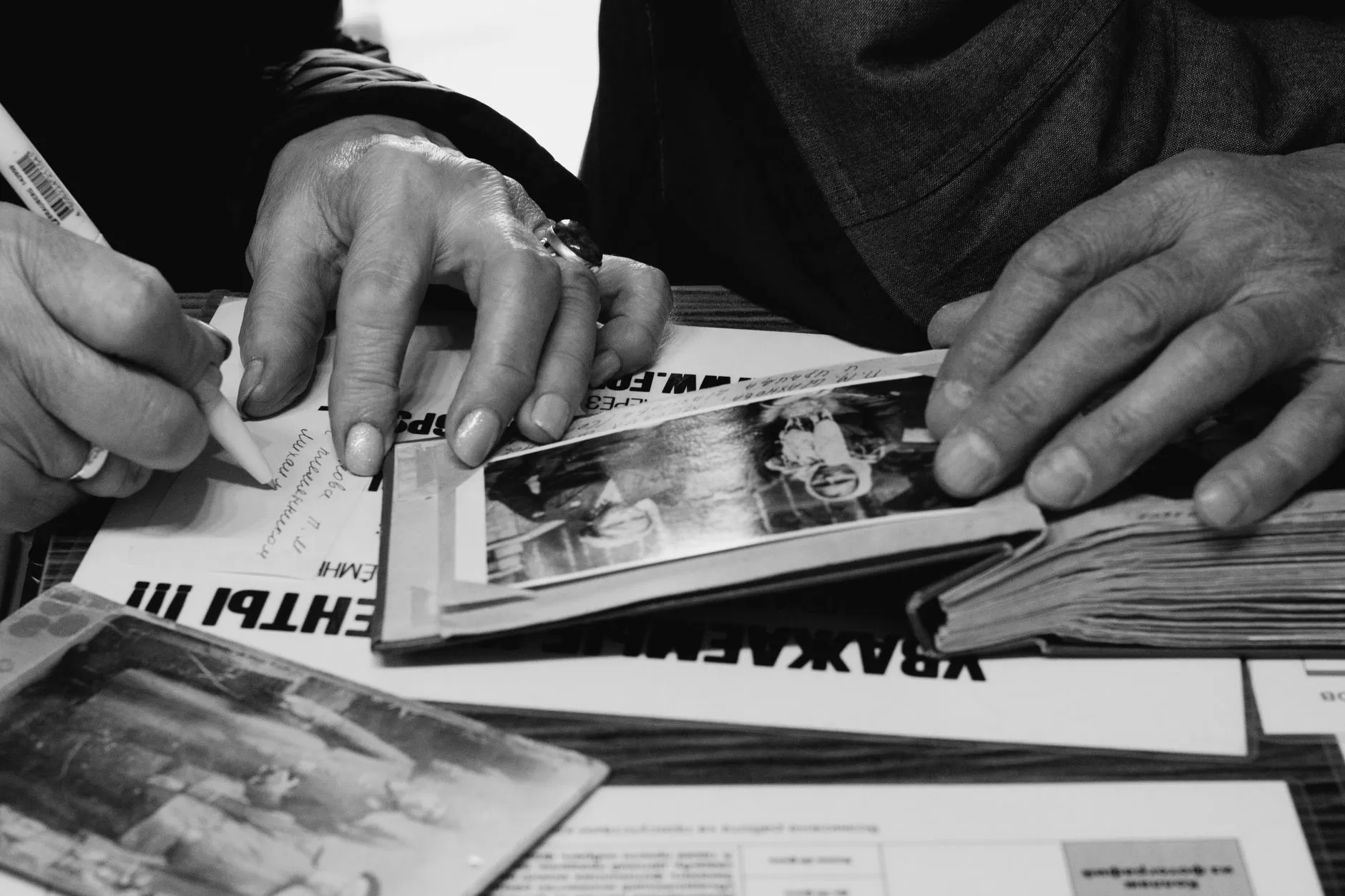
What the numbers and stamps on the back of an old photograph mean
The back of an old photograph can carry a paper maker's stamp box, a processing date code and a handwritten note, and each one dates a different thing. What each mark can and cannot prove, and why the back is worth one extra scan.

Turn an old photograph over and you might find a printed rectangle near one edge, a rubber stamp with a name and a date, a string of digits in pencil, or nothing at all. All three are common, and people tend to read them as one thing, evidence of when the picture was taken. They are not. Each kind of mark on the back of a photograph proves something different, and knowing which is which stops you from either ignoring a genuinely useful clue or trusting one that cannot bear the weight you are putting on it.
Three different marks, three different questions
Before reading anything into a mark, work out which of three categories it belongs to, because each one answers a different question.
A printed stamp box dates the paper stock, not the print and not the photograph. A processing stamp or code dates roughly when the film was developed, which is usually close to when the picture was taken. Handwriting, prices and sequence numbers date nothing on their own and only mean what the person who wrote them intended.
Most backs carry one or two of these, rarely all three, and telling them apart takes a moment once you know what you are looking for.
The paper stamp box: dates the stock, not the shot
Many photographic papers used through the first half of the twentieth century, especially the postcard-backed stock used for real photo postcards and ordinary snapshot prints, carried a small printed box near where a postage stamp would go, naming the paper brand: Kodak, Velox, Azo, Cyko, Artura and several others all used this convention. The box was usually just a name and a simple border, nothing that looks like a date at first glance.
The dating value is in the design, not the words. Manufacturers changed the stamp box artwork, the border style and sometimes the brand name itself every so often across the decades, and collectors and genealogists have spent a long time cataloguing which box design belongs to which rough span of years. A stamp box will not usually hand you an exact year, but matched against a published paper stock guide it can narrow a print to within a handful of years, sometimes tighter, which is often better evidence than anything else an unlabelled photograph offers.
The honest limit is that this dates when the paper was manufactured, not when a specific print was made on it. A photographer could hold a box of paper stock for months or occasionally years before using it, so a stamp box puts a reasonable floor under the date and rules out anything earlier, but it does not prove the exact year the shutter clicked.
The processing stamp or code: the closest thing to an actual date
A separate kind of mark, usually a rubber stamp rather than something printed into the paper itself, records when and where a photograph was developed. Drugstores, camera shops and mail order photofinishers commonly stamped or printed a return address on the back of the prints they returned to customers, and a good number of them included the processing date directly, sometimes a full date, sometimes just a month and year.
This is the most useful mark for dating an ordinary mid-twentieth-century family snapshot, because film was usually developed within days or weeks of being shot rather than sitting unprocessed for years. A processing stamp reading a month and year is a strong, direct claim about roughly when the picture in front of you was taken, in a way that a paper stamp box cannot quite offer.
Some processors used a printed code rather than a written date, small symbols or letter and number combinations along the border or the back that mapped to a batch or a period. These codes are specific to the lab or the paper run that produced them and are not consistently documented the way the major paper brands’ stamp boxes are, so treat an unfamiliar code as a clue worth keeping rather than one you can decode with confidence from a general guide.
Handwriting, sequence numbers and studio backstamps
The remaining marks on a photograph’s back date nothing by themselves, but they are still worth reading carefully.
A handwritten date or note is exactly as reliable as the person who wrote it. A caption added the day a photograph was taken is excellent evidence. A caption added decades later from memory is a family member’s best guess, and both can look identical on the page. If you know roughly when a note was added, say so alongside it when you record the photograph.
A small printed or stamped number in a corner is usually a lab’s negative or frame number, used to match a print back to its negative during processing. It is administrative, not chronological, and it is easy to mistake for a date because it is often the same length as one.
A studio’s printed backstamp, with a name and sometimes an address, works the same way as the photographer’s imprint on a cabinet card mount: it names who made the print, and it only becomes a date if you can research when that studio operated at that address.
Why these are three different years
It is worth being plain about this, because the difference matters more than any individual mark. A photograph can carry a paper manufactured in one year, printed in a second year, and depicting an event from a third year entirely, and a back covered in marks can leave all three questions only partly answered.
In practice the gap is usually small for an ordinary family snapshot, weeks or months rather than years, but it stops being small for older or reprinted material. A print made from a decades-old negative, a reprint ordered years after the original, or a postcard printed on paper stock that sat in a shop for a season before it was used can all separate these three years by a meaningful amount. Read what each mark actually claims before treating any of them as the photograph’s date.
Scan the back too
Whatever is on the back is evidence, and it costs one extra pass to keep it. A stamp box, a processing date and a handwritten note are all easy to miss on the original and easy to lose if only the front ever gets copied.
Scan both sides, even when the back looks blank at a glance. Faint pencil, a light rubber stamp and an embossed paper mark that only shows under raking light can all be missed by eye and picked up cleanly by a scanner. Our guide to what DPI to scan old photos at covers a sensible setting, and the same setting that resolves the portrait on the front will resolve a stamp box or a faint pencil note on the back. If you want the exact pixel dimensions a given size and setting will produce, the photo scan pixels tool will do that arithmetic for you.
Keep the scan of the back next to the scan of the front, named so the pairing is obvious, rather than filing the back away separately or not at all. A caption or a date is only useful evidence if whoever inherits the collection can find it next to the photograph it belongs to.
Do not clean or press a back with staining or adhesive residue before scanning it. Marks that look like damage are sometimes the evidence you are trying to read. If the back is also stained, our page on stains on old photos covers what is safe to do about the mark once you have a scan of it.
A sensible way to read a back you do not understand
Work through what is actually there in order, rather than reading the first thing you notice as the answer.
Identify the category first. Printed stamp box, processing stamp, or handwriting, because each one supports a different kind of claim.
Treat a paper stamp box as a floor, not a date. It tells you the print cannot be older than the paper’s manufacture, and a published paper stock guide can often narrow that further.
Treat a processing stamp as your best single clue for an ordinary snapshot, since it is usually close to the date the picture was taken.
Treat handwriting as a claim by a specific person at a specific, sometimes unknown, time, useful but not neutral evidence the way a manufacturer’s mark is.
Record all of it, not just your best guess. A caption that says “Velox stamp box, no processing date, handwritten note added later reading 1952” is more useful to the next person than a single confident year with nothing behind it. The back of a photograph rarely gives you certainty, but it almost always gives you more than the front does alone.
Common questions
- What do the numbers on the back of old photos mean?
- It depends where they sit. A number printed in a small stamp box near a fold line is usually a paper manufacturer's code, dating the paper stock rather than the picture. A number stamped separately, often with a name or a town, is usually a photofinisher's processing mark and dates roughly when the film was developed. A number written by hand is whatever the writer meant it to be, a date, a negative number, or a price.
- Does the date on the back of a photo tell you when the picture was taken?
- Only loosely, and only if it is a processing stamp. Film was often developed within days or weeks of being shot, so a processing date is usually close to the picture. A paper stamp box dates when the blank paper stock was manufactured, which can be months or years before a specific print was made from it, so it puts a floor under the date rather than pinning it down.
- What is a stamp box on the back of a photograph?
- A small printed rectangle, usually where a postage stamp would go on a postcard-backed print, carrying the paper brand name such as Kodak, Velox, Azo, Cyko or Artura. Paper manufacturers changed the box design every so often, and collectors have catalogued which designs belong to which rough years, which is why the stamp box is worth checking even on a print that was never mailed.
- Should I write on the back of an old photograph to record what I know?
- Not on the original print, and never in ink. Pencil is safe if you must write directly on a print, but the better habit is to record what you know in the scanned file's name or caption instead, so the original stays unmarked and the note travels with every copy rather than risking the one print it is written on.