How to date a cabinet card from its mount
How to date a cabinet card portrait using the mount board, corner shape, edge treatment and the photographer's printed imprint, with honest decade ranges rather than exact years, and how to scan one without damaging it.
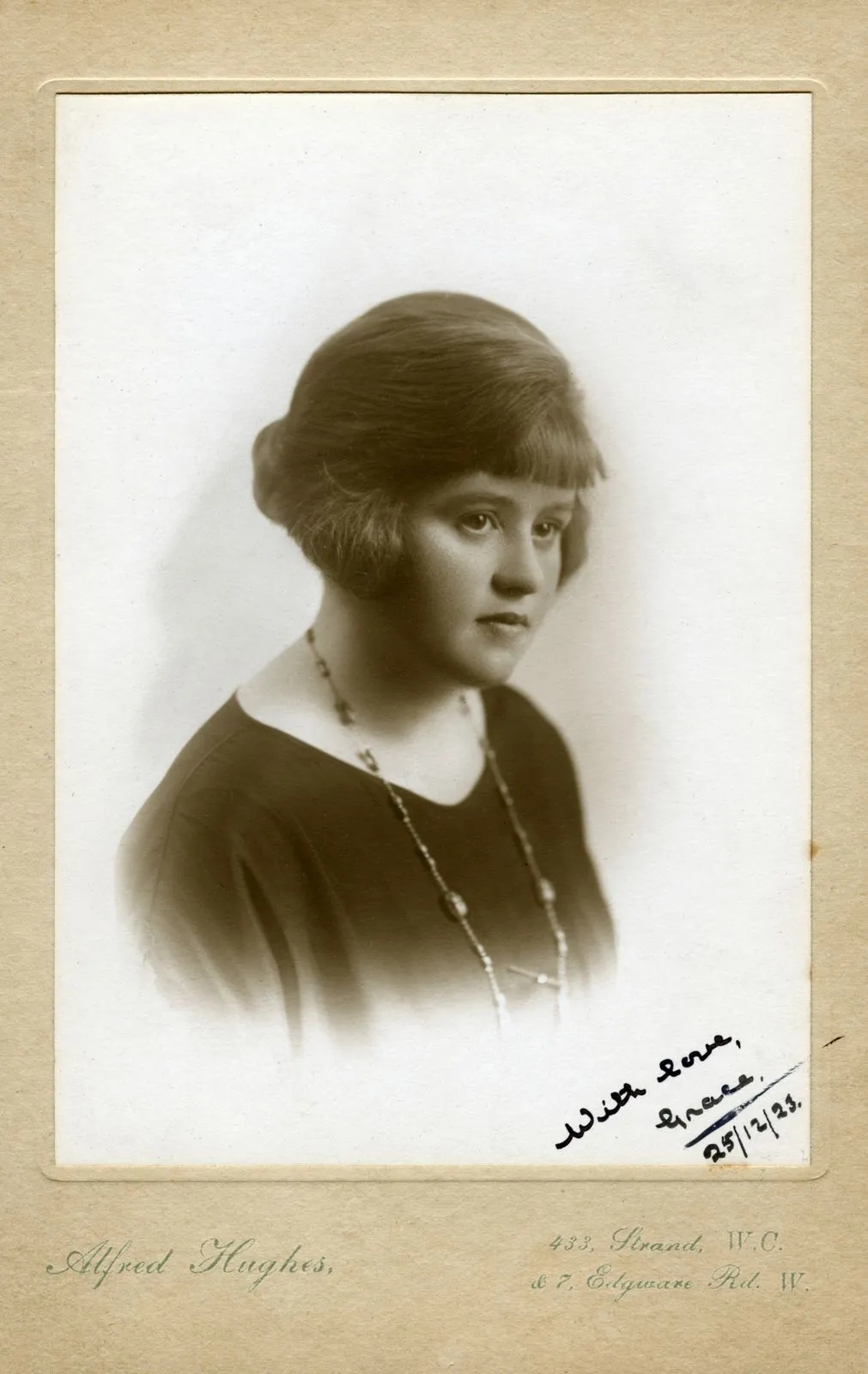
A cabinet card looks like an ordinary old photograph until you notice it is not really a photograph on its own. It is a print glued to a stiff piece of cardstock, usually with the photographer’s name printed somewhere on the mount, and that mount is where most of the dating evidence actually lives. Learn to read it and a cabinet card with no other information can usually be placed within a decade or better, often without knowing a single person in the picture.
What a cabinet card actually is
Cabinet cards were the standard studio portrait format from roughly the mid-1860s through the early 1900s, gradually replaced by smaller, cheaper real photo postcards and, later, by home snapshot cameras. The mount is close to 4.25 by 6.5 inches, noticeably larger than the earlier carte de visite it succeeded, which sat closer to 2.5 by 4 inches. If you are holding a stiff cardstock mount around that larger size with a studio portrait on it, you almost certainly have a cabinet card.
The photograph itself is usually an albumen print for cards from before about 1890, giving it a glossy surface and a warm brown tone, and a matte collodion or gelatin print for cards from the 1890s onward, with a flatter surface and cooler, more neutral tones. That shift in surface and tone is itself a rough dating clue, well before you look at the mount around it.
The mount is the clock
Mount board style moved through a fairly well documented sequence across the cabinet card era, and reading it is the single most useful dating skill for this format.
Thickness and colour. Early cards, through the 1870s, used thin, light card stock in plain white or cream. Through the 1880s the board grew thicker and colours widened to include grey, tan and pale tints. By the 1890s, mounts were routinely heavy, dark and sometimes textured, with black, deep green and maroon becoming common, often finished with a gold beveled edge. By the early 1900s, ornate dark mounts with rough or linen-like textures and Art Nouveau lettering were typical, right before the format faded out in favour of cheaper alternatives.
Corner shape. Square corners are the earlier style, generally the 1860s through the early 1880s. Rounded and scalloped corners became fashionable from the mid-1880s onward and stayed common through the rest of the format’s life. A cabinet card with sharp square corners and a plain thin mount is a reasonably strong sign you are looking at something from before 1880 rather than after it.
Edge treatment. A plain cut edge is the earlier and simpler style. Gold or silver beveled edges appear from the 1880s and become more elaborate as the decades go on, often paired with an embossed border or a decorative frame printed around the image itself. The more ornamental the border, the later the card is likely to be, right up until the format’s final, heavily decorated years.
None of these signs works alone with any precision, but together, thickness, colour, corner shape and edge treatment, they usually narrow a cabinet card to a range of five to fifteen years, which is often better than most other clues on an unlabelled photograph can offer.
The photographer’s imprint, front and back
Almost every cabinet card carries the studio’s name somewhere, printed in decorative type along the bottom of the mount on the front, on the back, or both. This imprint will not date a card by itself, but it opens a second line of evidence that mount style alone cannot give you.
Check both sides before you conclude anything. Some studios printed an elaborate design on the back with the full address and sometimes trade medals or awards the studio had won, which can be more specific than anything on the front.
A studio address is researchable. Photography studios moved, changed names, took on partners and closed, all on timelines that sometimes survive in local business directories, newspaper advertisements or historical society records. If the imprint names a street address, a genealogy or historical society covering that town can occasionally date a card to a handful of specific years, far tighter than the mount style alone provides.
A change in the wording is a clue on its own. If you have several cabinet cards from the same studio and the imprint wording or address changes between them, that change marks a real point in time, even if you cannot pin down the exact year without further research. Our guide on identifying people in old family photographs covers how to use exactly this kind of physical evidence to narrow down who is in a picture once you have narrowed down when it was taken.
Reading the clues together, honestly
Dating a cabinet card from the mount alone is a matter of ranges, not certainties, and it is worth resisting the urge to state a single confident year when the evidence only supports a decade. A thin white square-cornered mount with a plain cut edge and an albumen print points toward the 1870s. A heavier, tinted mount with rounded corners and a light bevel suggests the 1880s. A dark, ornate mount with a gold bevel and a matte print points toward the 1890s or later.
Combine the mount evidence with anything else the card offers, clothing style, hairstyle, props in the studio background, before settling on a range, and write the range down rather than a guessed year. A card correctly labelled “cabinet card, studio mount, probably late 1880s” is more useful to whoever inherits it than a specific year attached with no real basis.
How to handle and scan a cabinet card safely
The mount is usually the most fragile part of a cabinet card, more so than the photograph it carries. Old cardstock cracks along creases, corners chip, and a card that has bowed from damp storage can snap if forced flat too quickly.
Support the whole card, not just the edges. Lift and carry it flat, with a hand under the full mount rather than gripping it by a corner.
Never force a bowed card flat. If a card has warped, let it settle under light, even weight over time rather than pressing it down under a scanner lid, which can crack the board along its curve.
Do not mistake age spotting on the print for something you need to fix before scanning. Cabinet cards this old often show the same mottling and surface deterioration common to albumen prints of the era. Our page on deteriorated and mottled photos shows what that damage looks like and what a scan can recover, but the scan comes first regardless of how the print looks.
Scan both sides. The back sometimes carries information the front does not, a second imprint, a name, a date written by a previous owner. It costs one extra pass and it is worth doing before you decide the card is undated.
Scan at a resolution that captures the card as an object, not just the portrait. Our scan resolution calculator will tell you the right DPI for the mount’s full size, and 600 DPI is a sensible archival setting for a cabinet card, high enough to keep the embossed border and the printed imprint legible if you ever need to zoom in on them later. The full range of settings by print size is worked through in our scan-settings reference.
Once it is scanned, store the original the way you would any fragile paper artefact rather than a photograph alone. Our guide to storing old photographs covers enclosures and conditions that protect card stock as well as prints.
What the mount cannot tell you
A mount and an imprint can narrow when a card was made. They say nothing about who is in it, and it is worth being honest about that limit rather than reading more into the evidence than it supports. Once you have a decade from the mount, the rest of the identification work is a different job, matched against family knowledge, other labelled photographs and simple elimination by age. Treat the two tasks separately, and the dating work you do here becomes a genuinely useful starting point for the harder question of who is looking back at you.
Common questions
- How can I tell if I have a cabinet card?
- A cabinet card is a photographic print mounted on cardstock roughly 4.25 by 6.5 inches, larger than the earlier carte de visite, which measures closer to 2.5 by 4 inches. If the mount is that size and the print shows a studio portrait rather than a snapshot, it is almost certainly a cabinet card, made somewhere between the mid-1860s and the early 1900s.
- What is the fastest way to date a cabinet card?
- Look at three things in order: the mount colour and edge treatment, the corner shape, and any photographer's imprint on the front or back. Together they usually narrow a cabinet card to a range of five to fifteen years, which is normally as precise as the mount alone will get you without outside research.
- Does a photographer's address always help date a cabinet card?
- Only if you can research it. The imprint alone just tells you which studio made the print. Its dating value comes from cross-referencing the studio name or address against local business directories, newspaper archives or genealogy societies for that town, which can sometimes pin a card to a specific handful of years.
- How do I safely scan a cabinet card without damaging the mount?
- Support the whole card flat rather than letting it bow over the scanner bed, since the mount is usually more fragile than the photograph it carries and can crack along old creases. Scan both sides, because the back sometimes carries a second imprint, a date or a name the front does not. A flatbed scan at 600 DPI captures the card at an archival standard without needing to press it hard against the glass.