Can a badly faded photo be recovered?
How to fix faded and darkened old photos
Some photos do not tear or stain, they simply leave: light fades prints, and silver images tarnish toward black. The information is usually still there.

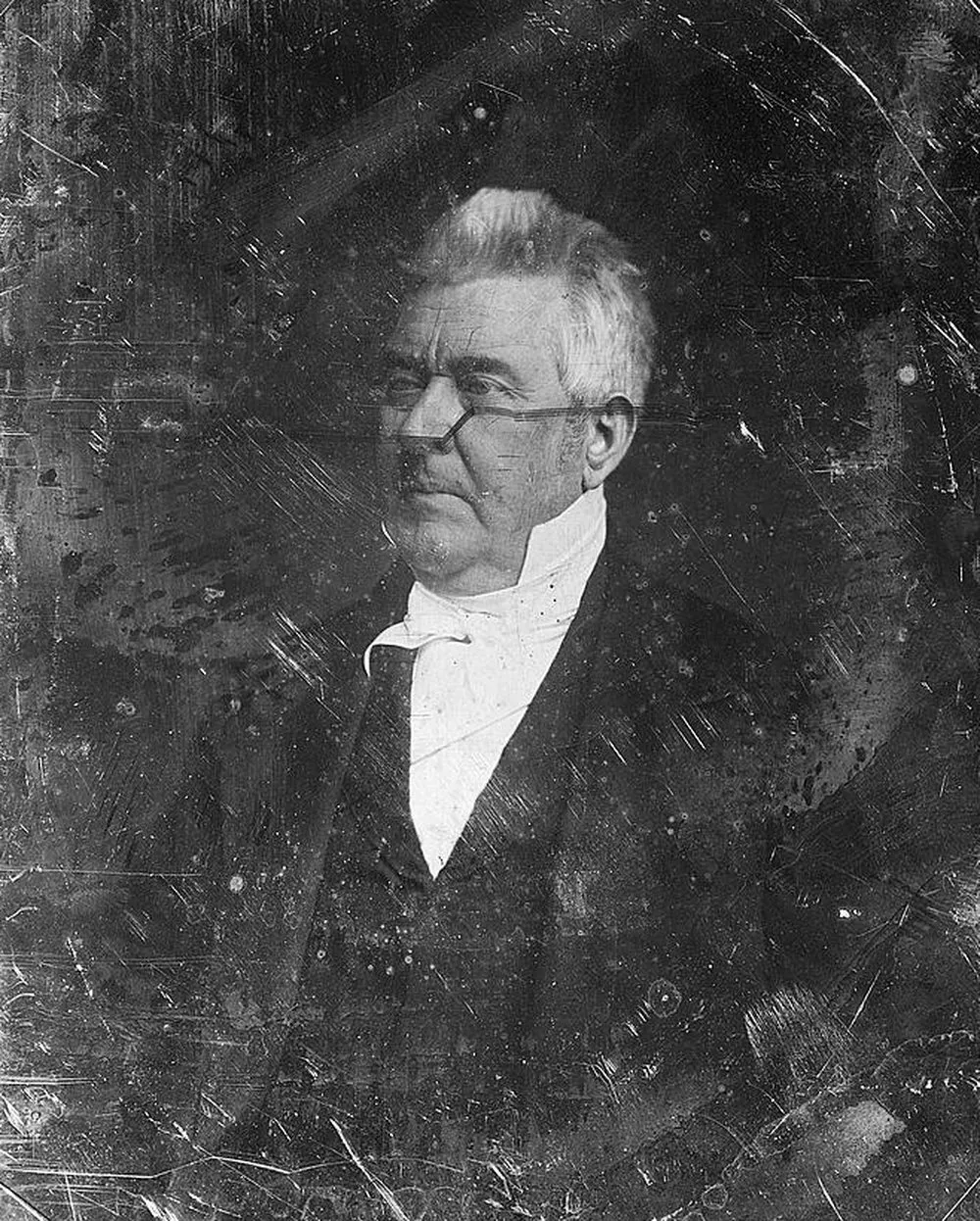

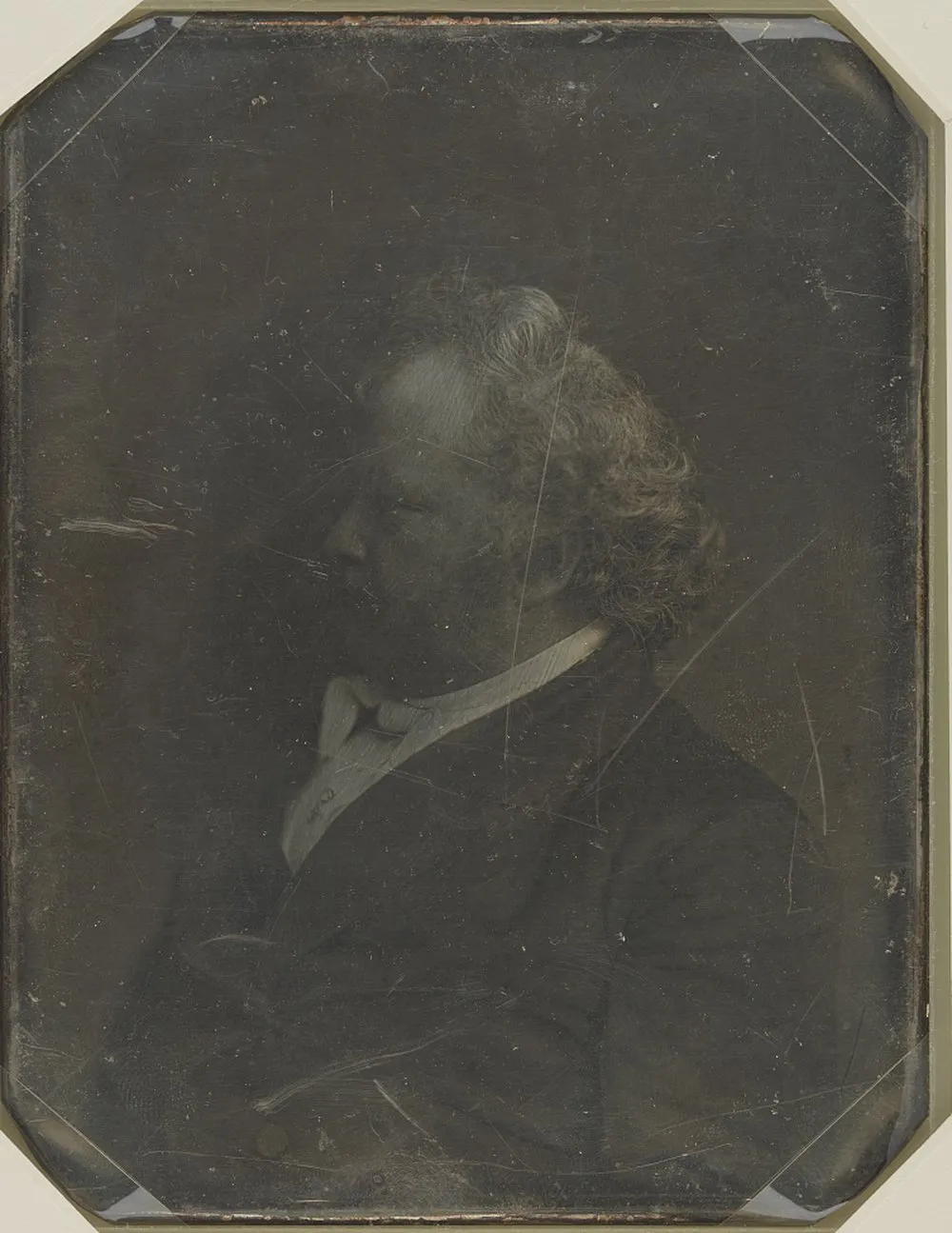
 Before
 After
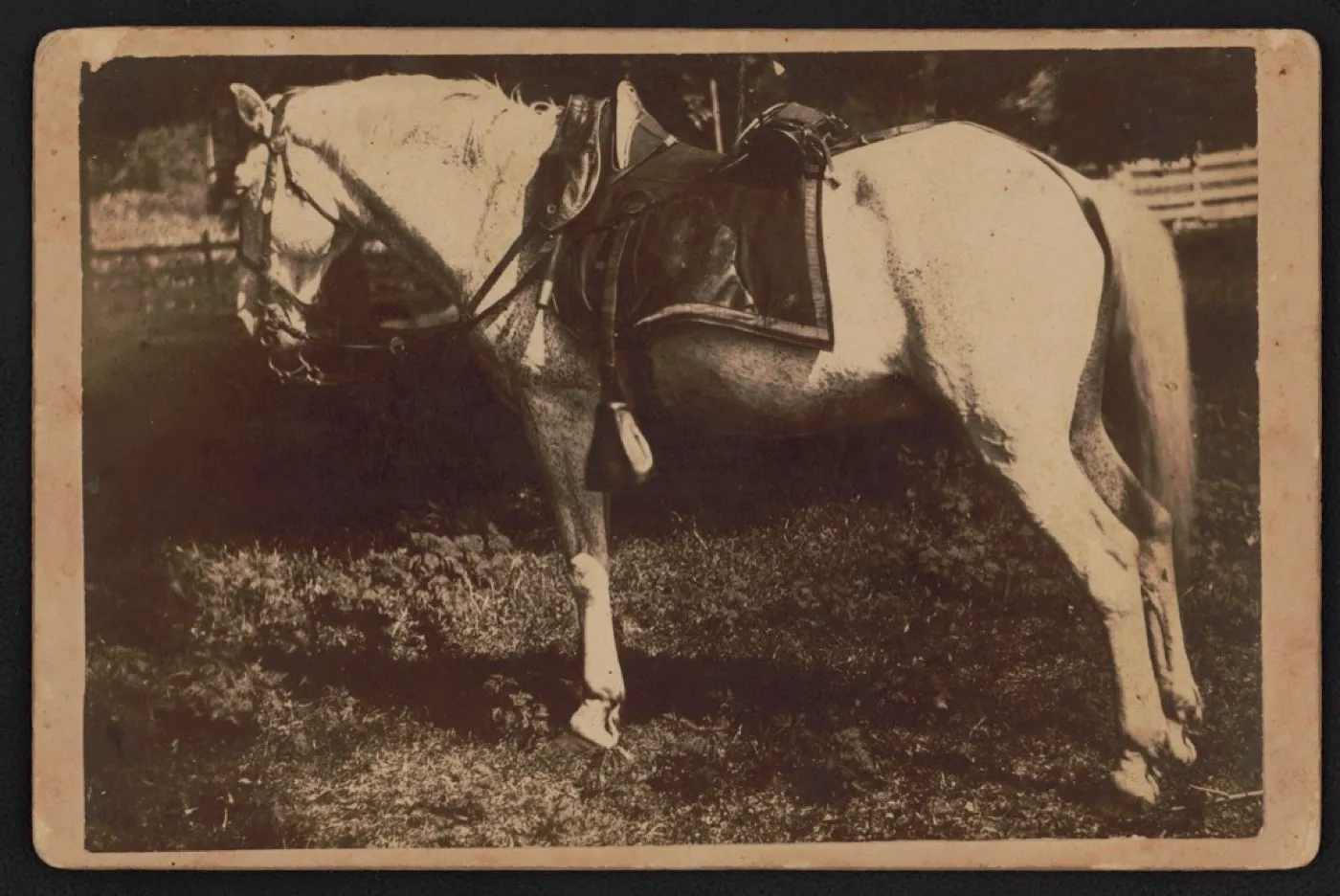
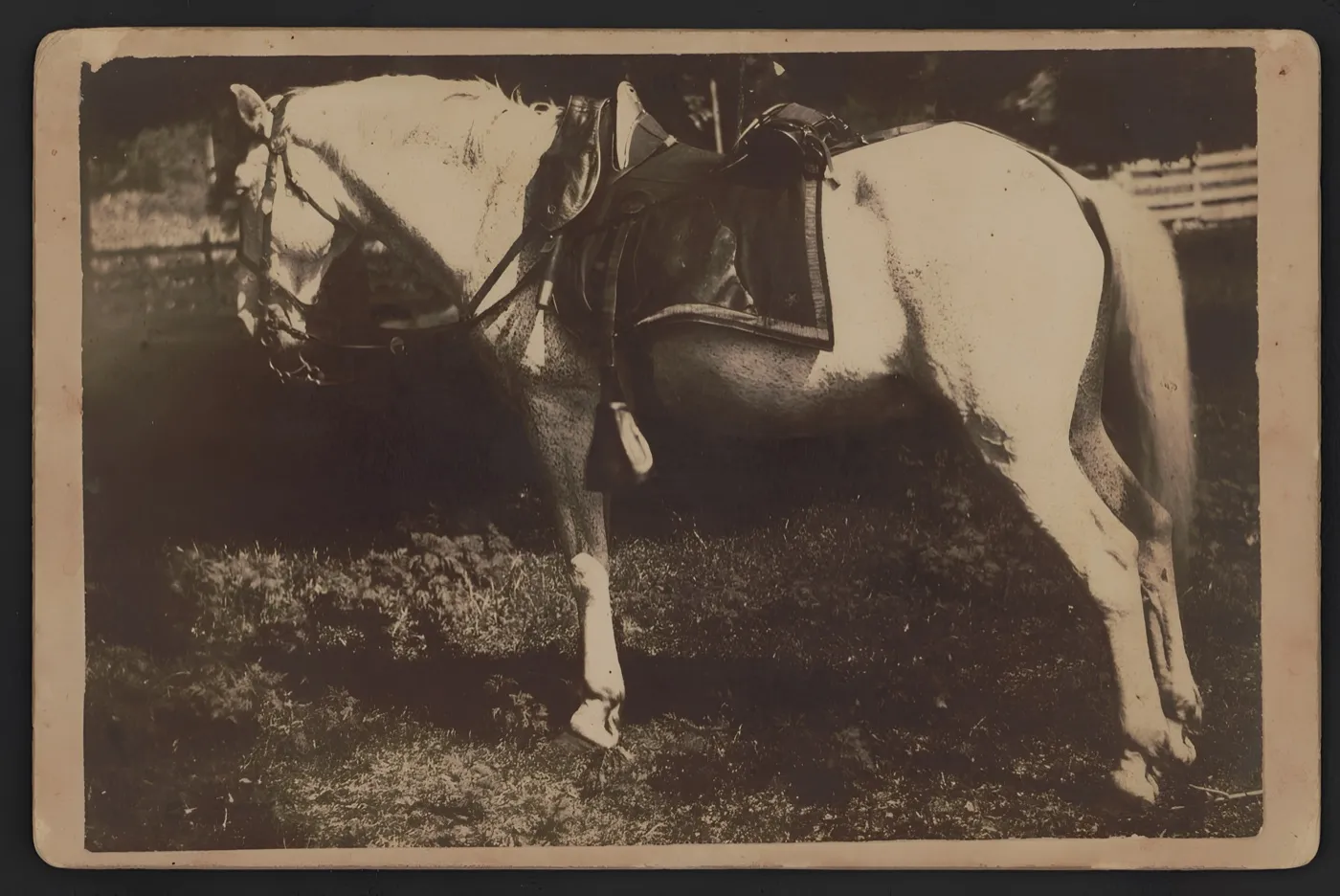
AfterA faded sepia cabinet card from about 1880
A print that has faded almost to the paper. This one is here to find the floor: how much detail survives inside a tonal range that looks empty to the eye.
Enhance did what Enhance is. It removed grain and resolved the card at four times the size, and at full size the gain is real: the girth buckle, the stitching on the saddle and the individual blades of grass are all readable where they were mush. What it did not do is bring the tone back. A faded print goes into Enhance faded and comes out faded, sharper. This page should not promise otherwise, so it does not.
- Source
- Colonel, a Union horse who survived 18 battles, about 1880
- Holder and licence
- Library of Congress, LCCN 2015650837, no known restrictions
- Control used
- Enhance
- Model it called
- jingyunliang/swinir on Replicate
- Elapsed
- 9.7 seconds
- Output size
- 4096 x 2740 px
- Captured
- 17 Sep 2026

What this damage is
Prints fade because light slowly bleaches the image, which is why the framed photo by the window goes first while its twin in the album survives. Very old silver photographs go the other way: the metal itself tarnishes like unpolished silverware, and the picture sinks into a dark mirror.
Both plates below had almost disappeared. The remarkable thing about photographic fading is how much survives beneath it: contrast collapses long before detail does.
Can it be fixed?
This is the recovery AI restoration was built for. The model stretches what little tonal separation remains back into a full range, and faces that were barely visible return. Severe cases like the first example are genuinely transformed rather than perfectly recovered: treat the result as a portrait rescued, not a time machine. The moment a faded photo is scanned and restored, its fading is over for good.
Where the repair stops
Contrast collapses long before detail does, which is why an almost invisible print often comes back in full. The floor is the point where the image layer itself has gone. Past that, restoration produces a strong portrait rather than a recovered one, and this page will say which of the two you are looking at.
Before any repair, get a proper scan: the DPI advisor gives the right setting in two questions, and the scanning guide covers the craft.
One badly faded sepia cabinet card, run through three tools on the same day, at the same input size.
Photo Restore
Our own app, the Restore control
- Elapsed
- Awaiting the run
- Verdict
- Not written yet
Pending a run: every restoration is billed to a hosted model, so it needs sign-off.
MyHeritage Photo Enhancer
Free tier, with In Color
- Elapsed
- Awaiting the run
- Verdict
- Not written yet
Pending the chairman: the free tier will not release a result without an account.
Remini
Free tier, the enhance preset
- Elapsed
- Awaiting the run
- Verdict
- Not written yet
Pending the chairman: the free tier is an app install behind a sign-in.
When these three frames exist, this bench will say plainly what each tool beats us at. A comparison that only ever finds us in front is an advert, and we have said so on the about page since July.
Five things to do to the original, in this order
- Take the original out of the frame and out of the daylight.
- Frame a reprint of the restored scan instead, and keep the original dark.
- Scan at 600 DPI or higher in 48 bit colour if your scanner offers it: faded prints hide their detail in a narrow tonal band.
- Turn off every automatic correction in the scanner software.
- Store the original in acid free paper at stable, moderate humidity.
Common questions
- Why did my framed photo fade faster than the ones in albums?
- Light exposure. Display copies take the damage while stored copies survive. Frame a reprint of the restored scan and keep the original in the dark.
- Can a photo that is almost completely dark be recovered?
- Often, to a surprising degree, because detail outlives contrast. But there is a floor: where the image layer is truly gone, restoration rebuilds plausibly rather than recovers. Expect a strong portrait, not a guaranteed replica.
- How do I stop my other photos fading?
- Keep originals out of direct light, in acid-free storage, at moderate stable humidity, and display copies rather than originals. Scanning them today is the only permanent insurance.
The damage is the before. You hold the after.
Real repairs on real photographs. Your family's copies deserve the same rescue.