
What photo restoration actually costs, and when it is worth paying
Four honest price bands for restoring an old photograph, from free apps to archival studios with a guarantee. What actually moves the price, and the one cheap thing you can do that improves every option on this list.
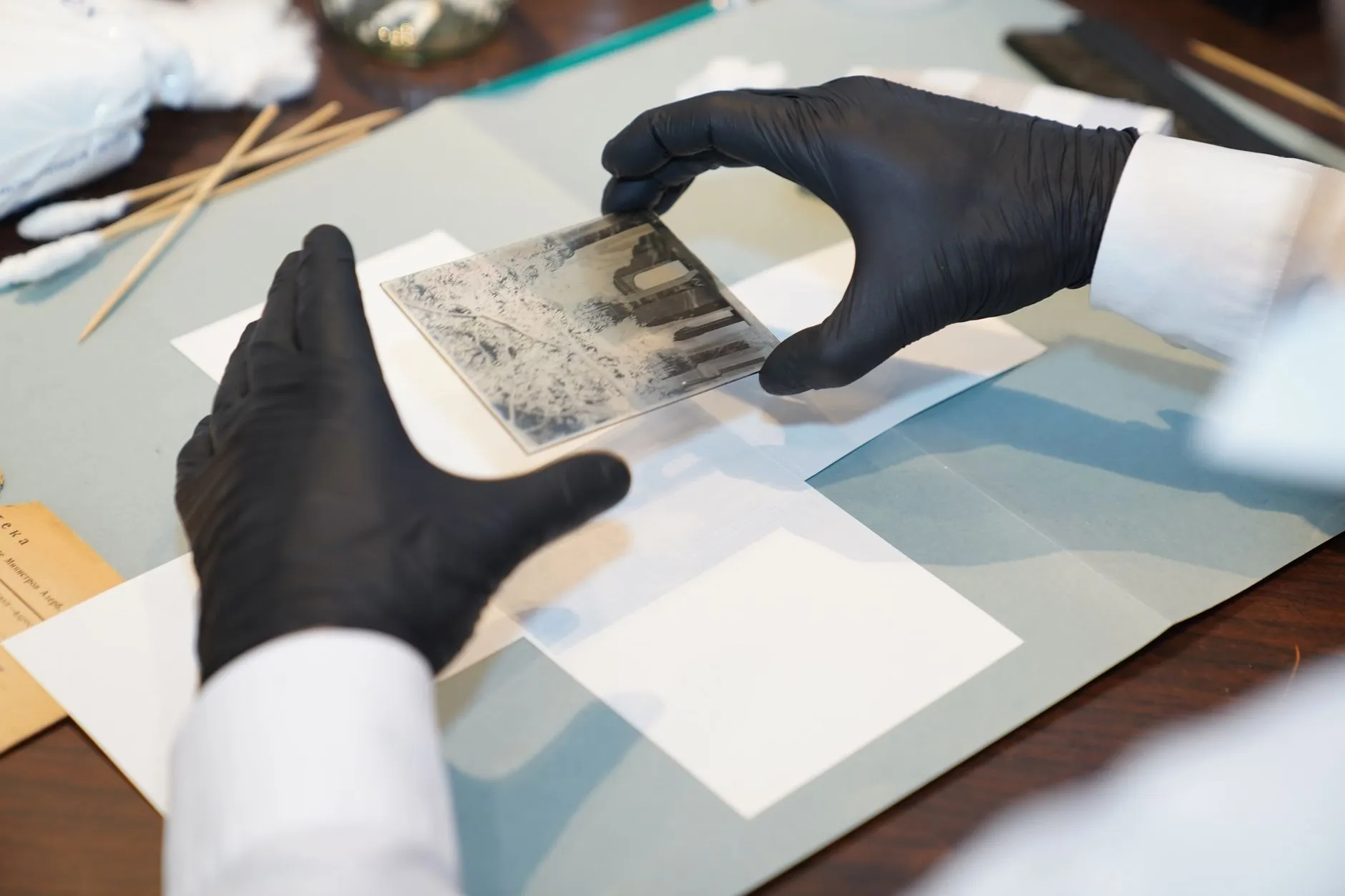
Type “photo restoration cost” into a search bar and you will get numbers ranging from nothing to four figures, all for what sounds like the same job. That range is not a scam and it is not random. It reflects four genuinely different services, and knowing which one you actually need is most of the battle.
Four price bands, and what each one honestly buys
Free, one-click AI tools. Upload a photograph to an app or a website, wait a few seconds, download the result. The cost is zero, or a small subscription if you want the watermark removed and full resolution. These tools are genuinely good at general fading, low contrast and mild softness, because the underlying detail is still present in the file and the model only has to rebalance it. They are not good at physical damage, because there is nothing left in a torn or missing area for the model to work from, so it invents a fill that is often subtly wrong on close inspection. Our honest look at free AI restoration tools covers exactly where they succeed and fail.
Gig marketplace retouchers. Individual freelancers on platforms built for this kind of work, typically ten to fifty dollars for a straightforward repair, more for heavy damage or a rush turnaround. Quality varies enormously between one retoucher and the next, because there is no licensing body checking the work, so the only real quality control is reading reviews and asking to see comparable before-and-after examples before you commit a photograph you cannot replace.
Local photo studios and print shops. Many photography and print businesses still offer restoration as a side service, usually fifty to two hundred and fifty dollars depending on damage. The advantage is a human conversation before any work starts. You can bring the actual print in, point at what worries you, and ask what is realistic before money changes hands. That conversation alone is worth something a website quote form cannot give you.
Archival and conservation services. Businesses that specialise in historically significant or badly damaged material, with named conservators, a written condition report, and often a guarantee on the work. Pricing regularly runs into several hundred dollars and sometimes beyond a thousand for a genuinely difficult piece, such as a cased image or a photograph with major structural loss. This tier exists for photographs where getting it wrong is not an acceptable outcome.
What actually moves the price
The price is not set by who does the work so much as by what the work involves.
Fading and low contrast cost minutes. The tonal information is compressed but still there, so correcting it is closer to adjusting a dial than reconstructing anything. This is why free tools handle it convincingly and why a paid restorer will usually charge close to their minimum for it.
Tears, creases and missing pieces cost hours. A skilled person has to look at the surrounding image, understand what was probably there, and reconstruct it in a way that holds up under scrutiny, especially across a face or a patterned fabric. That is judgement, applied slowly, and it is the single biggest reason two quotes for two different photographs can differ by a factor of ten. Our guide on restoring a torn photograph walks through what that reconstruction actually involves and where it has honest limits.
Colourisation is a separate line item almost everywhere. It is a different skill from repair, adding a plausible colour palette to a black and white image rather than removing damage from it, and quoting it as part of a restoration price is the exception rather than the rule. If you want both, ask for both prices up front so there is no surprise on the invoice.
Scale changes the maths, not the per-photo price. Restoring four hundred photographs individually at even a modest per-photo rate adds up fast. If you are working through a whole collection rather than one or two special images, it is worth deciding early which photographs actually need paid restoration and which are fine as an honest scan, because that decision saves far more money than negotiating any single quote.
The cheapest lever you actually control
Whichever tier you choose, free or four figures, every restoration is capped by the quality of the file it starts from. A blurry, low-resolution phone photo of a print handed to the best conservator in the country still produces a soft result, because there is a ceiling on how much detail can be recovered from a scan that never captured it in the first place.
This is the one part of the whole process that costs you nothing but a few extra minutes: scan the print properly before you send it anywhere. A higher-resolution scan gives a free tool more to work with, gives a paid restorer cleaner source material to reconstruct from, and gives you a proper archival copy regardless of what happens next. Our scan resolution calculator works out the right setting for the print size and detail you are trying to capture, so you are not guessing.
If the print itself is scratched or scuffed rather than torn, it is also worth knowing that some of that damage is removable at the digital stage rather than something you need to pay a specialist for. Our guide on fixing scratches on old photographs covers what a careful digital pass can genuinely lift out.
A quick way to decide
Ask yourself three questions before you spend anything.
Is the damage physical or tonal? Fading, flatness and mild softness point toward a free tool being genuinely enough. Tears, missing pieces and structural damage point toward a paid human, because that is where judgement earns its price.
How replaceable is this photograph? A duplicate print, a digital-era photo, or something with a backup elsewhere in the family carries less risk if a cheap attempt goes wrong. A one-of-a-kind photograph of someone who is gone is worth the higher tier, because a bad result on the only copy is not something a refund fixes.
What happens to the file afterwards? If you need a print-quality result without a watermark, that alone can push you past the free tier even for light damage, simply because that is where most free services choose to monetise.
None of these tiers is wrong. They are different tools for different damage, and the honest answer to “how much does photo restoration cost” is that it depends on what is actually wrong with the photograph in front of you, not on which service you happen to click first.
Common questions
- How much does it cost to restore an old photo?
- Free with a one-click app, ten to fifty dollars from a gig marketplace retoucher for a straightforward repair, fifty to two hundred and fifty dollars from a local studio, and often several hundred dollars from an archival service for a badly damaged or historically significant photograph. Where you land depends far more on the damage than on who you ask.
- Why do some photo restorations cost so much more than others?
- A tear or a missing corner takes a person hours of careful reconstruction, because the software has to guess convincingly at information that no longer exists. A photo that has simply faded or gone flat can be corrected in minutes, because the original detail is still sitting in the file, just compressed into a narrow range of tones. Time is what you are paying for, not the click.
- Is colourisation included in a photo restoration quote?
- Almost never. Restoration repairs damage, colourisation invents a plausible colour palette for a black and white image, and they are different skills billed separately nearly everywhere. Ask for a colourisation quote on top of a restoration quote rather than assuming one covers the other.
- What is the cheapest way to improve the result before I pay anyone?
- A better scan. Every restorer, free or paid, is limited by the resolution and detail in the file you hand them. Rescanning a small print at a higher setting costs nothing but a few minutes and can lift the ceiling on what any restoration, including a free one, is able to recover.